Make the next bag of coffee an understandable choice.
Translate the catalogue into choices a customer can make: flavour direction, roast, grind and bag size. Keep factual origin and freshness information separate from subjective tasting language, and make one-time versus recurring purchases unmistakable.
- Brew method
- Flavour direction
- Grind
- Bag size
- One-time or recurring
Explain taste without inventing certainty
Give customers a short way to distinguish coffees: roast direction, origin and the merchant’s tasting description. Keep brew suggestions understandable for someone who does not know technical processing terms. Avoid making health, ethical-certification or freshness claims that are not supported by the actual product and supply chain.
Use a consistent information order across products. Bag size and grind are purchase choices; a brewing story is supporting context. If a grind is unsuitable for a method, explain the distinction before checkout rather than relying on a small caption hidden below the fold. Clearly distinguish whole beans from ground coffee and decaffeinated from conventional products. If roast dates vary by dispatch batch, describe that process rather than displaying a permanent fictional date on every product.
Make repeat purchases easy to recognise
Organise stable routes around coffee type or brew preference, with seasonal releases as a secondary layer. A returning buyer should be able to recognise the same product even when campaign photography changes. Keep unavailable coffees and replacement recommendations clear rather than silently switching the selected product.
Use product-specific fields for origin and preparation guidance where supported. For bundles or discovery packs, state included bags and weights. A bundle presentation alone does not manage component inventory. For subscriptions, confirm the selling-plan integration and cancellation wording separately.
Build evidence around the actual selection
An Ecomfella concept can combine a product-led hero, featured collection, information blocks and a clear cart. Those presentation families exist in the marketing inventory. A polished general product screenshot does not yet prove a coffee storefront, freshness process or subscription experience.
Before indexing, capture a dedicated unpublished coffee composition using legitimate product images and factual data. Show a grind change, a different bag size and the matching cart line on a phone. Test recurring and one-time modes only if a real supported subscription integration is configured; otherwise show one-time purchasing only.
- Provide truthful origin and preparation data.
- Verify grind and weight choices in cart.
- Distinguish one-time and recurring terms.
- Avoid invented roast or delivery dates.
- Record dedicated coffee mobile proof.
Inspect the real storefront layer
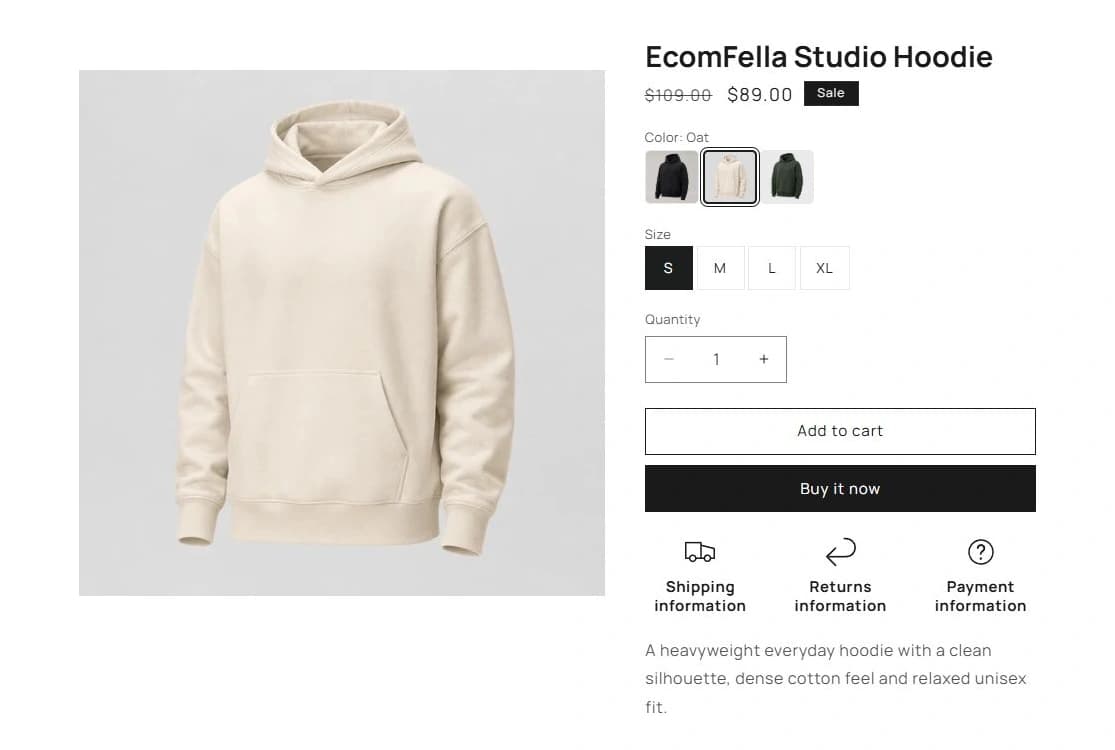
Read the Ecomfella theme overview, inspect the real product demo and use the package comparison to evaluate the remaining work. One licensed Shopify store per store seat. Upload the delivered ZIP as an unpublished Shopify theme. Review before publishing it yourself.
Questions before you decide
Are coffee subscriptions built into this concept?
No. A subscription requires an appropriate selling-plan/app integration and its own acceptance test.
Can I see a finished Ecomfella coffee store here?
No complete coffee demo is claimed. This useful planning brief remains noindex pending real coffee-specific evidence.
Bring this checklist to the theme.
See the real layouts and controls before deciding whether they fit your products. No theme purchase or delivery is enabled in this Preview.
Explore the real themeSources and review
Primary provider documentation reviewed on 2026-09-13. Features and policies can change; confirm the selected release and current provider terms. The Ecomfella media comes from the existing unpublished marketing-showcase evidence library.
Continue with the next question
Show the set. Keep the bundle logic honest.
All storefront guides and tools